(Spot-Test Steps + Stain Removal Do/Don’t List)
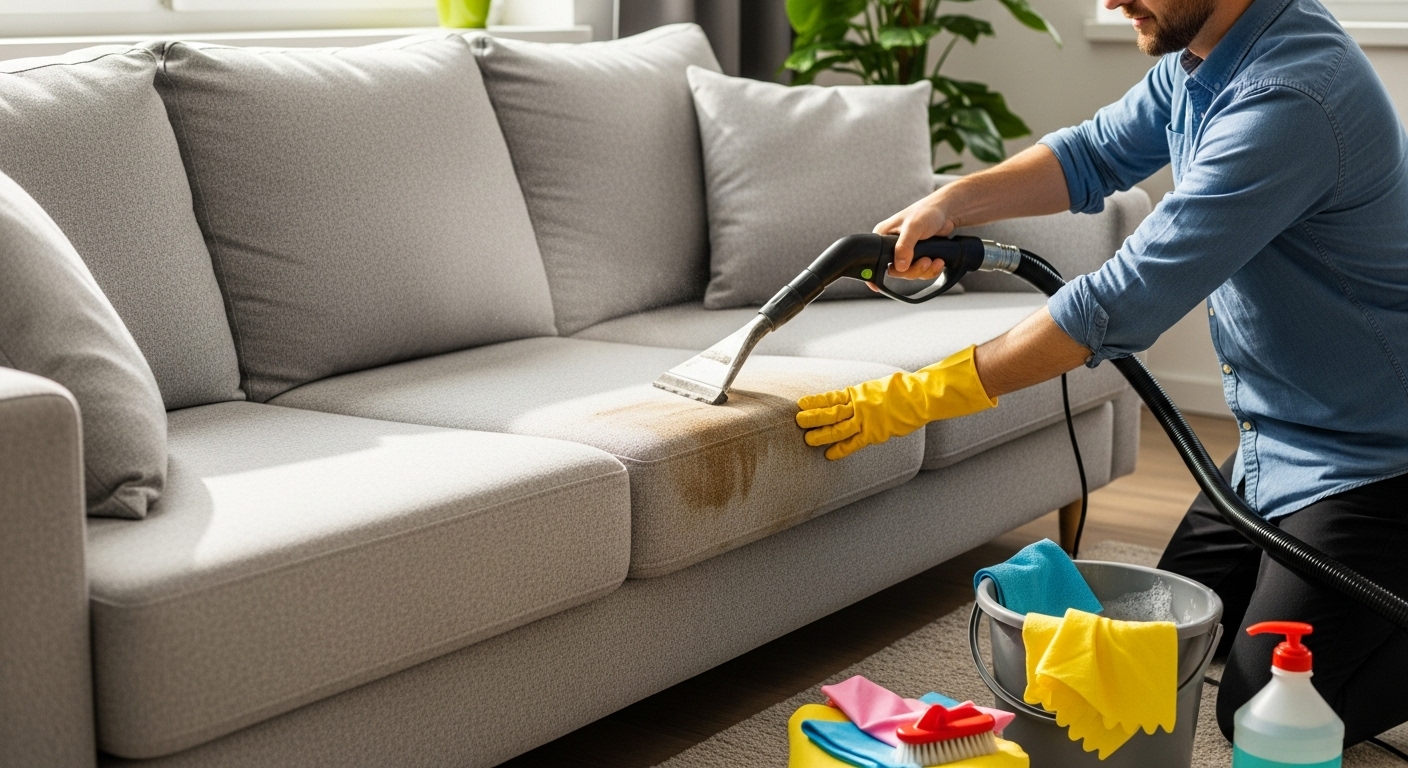
A fabric couch can look clean… until sunlight hits it and you see the real story. The good news: you can clean most fabric sofas safely at home—as long as you don’t skip the spot test or over-wet the cushions. This guide walks you through the safest method, plus a realistic do/don’t list to avoid damage.
Before You Start: Check the Sofa’s Cleaning Code
Look for the tag under a cushion or along the underside. Common codes:
- W = water-based cleaners are safe
- S = solvent-based cleaners only (no water)
- WS / SW = water-based or solvent-based okay
- X = vacuum only (no liquids)
If you can’t find the tag, treat it like delicate fabric and use the gentlest method + spot test.
What You’ll Need (Simple Household Kit)
- Vacuum with upholstery brush attachment
- Microfiber cloths (at least 2–3)
- Soft brush (or clean sponge)
- Spray bottle (optional)
- Mild dish soap
- Baking soda (for odors)
- White vinegar (optional, for some stains/odor—use carefully)
- Rubbing alcohol (only for “S” code fabrics)
Step 1: The Spot-Test (Non-Negotiable)
This step prevents discoloration, rings, and fabric texture damage.
Spot-test steps
- Pick a hidden area (back bottom edge or under a cushion).
- Apply a tiny amount of your cleaning solution to a cloth (not directly to the sofa).
- Dab gently for 10–15 seconds.
- Let it dry completely (at least 30–60 minutes; longer is safer).
- Check for:
- color transfer onto the cloth
- fading or darkening
- stiffness/crunchy texture
- water ring or tide line
If anything looks off: stop and switch to a gentler method (or different solution).
Step 2: Vacuum First (This Matters More Than People Think)
Vacuuming before wet cleaning prevents turning dust into muddy grime.
How to vacuum correctly
- Remove cushions and vacuum creases and seams
- Use upholstery attachment on top + sides
- Use a crevice tool along edges where crumbs hide
- Don’t forget the back panel and armrests
Step 3: Choose the Right Cleaning Method
Option A (Safest for most “W” or “WS” couches): Mild Soap + Water
Mix: a few drops of mild dish soap in a bowl of lukewarm water.
You want barely soapy water, not foam overload.
How to clean
- Dip cloth, wring it out hard (cloth should be damp, not wet).
- Dab stain from outside in. Don’t rub aggressively.
- Use a second damp cloth (plain water) to “rinse” by dabbing.
- Blot dry with a clean towel.
Goal: clean with minimal moisture.
Option B (“S” code fabrics): Rubbing Alcohol Method
Water can damage S-code fabrics, so alcohol is safer.
How to clean
- Put rubbing alcohol in a spray bottle.
- Lightly mist the cloth (or very lightly mist the stain).
- Dab gently, then brush lightly to restore texture if needed.
- Let it air dry.
Option C: Whole-couch refresh (Odor + Light Grime)
This is great when the couch is “generally gross” but not heavily stained.
Baking soda refresh
- Sprinkle baking soda lightly over cushions and arms.
- Let sit 20–60 minutes.
- Vacuum thoroughly.
Step 4: Drying (Prevents Rings + Musty Smell)
Drying is where many people mess up.
- Open windows or run a fan
- Stand cushions upright to dry evenly
- Don’t sit on it until fully dry
- Avoid heat guns/hair dryers on high heat (can set stains or shrink fibers)
If you see a ring forming, lightly dampen the whole panel area and blot evenly—rings happen when only one spot dries differently than surrounding fabric.
Stain Removal Quick Guide (Common Living Room Stains)
Coffee/tea
- Blot immediately
- Mild soap + water dab
- Rinse dab with clean water cloth
- Blot dry
Grease/oil (chips, pizza, lotion)
- Sprinkle baking soda or cornstarch first (10–20 minutes)
- Vacuum
- Then mild soap dab (don’t soak)
Wine/juice
- Blot fast
- Dab with mild soap + water
- If safe on your fabric, a very diluted vinegar-water dab can help (spot test first)
Pet accidents
- Blot thoroughly
- Use a fabric-safe enzyme cleaner (spot test)
- Dry completely (fan helps)
Do / Don’t List (Save Your Couch)
✅ DO
- Blot, don’t scrub (scrubbing spreads stains and damages fibers)
- Work outside-in to avoid expanding the stain
- Use minimal moisture to prevent water rings
- Vacuum first every time
- Test every solution in a hidden area
- Dry fast with airflow to prevent musty odors
❌ DON’T
- Don’t dump water directly on the couch
- Don’t use bleach or harsh cleaners (can permanently fade fabric)
- Don’t oversaturate cushion seams (traps moisture = odor)
- Don’t rub velvet/chenille aggressively (can crush texture)
- Don’t mix random chemicals (especially ammonia + bleach—dangerous)
- Don’t use colored towels (dye transfer is real)
Honest Experience Tips (What actually works at home)
- The biggest difference is speed. Fresh stains are 10x easier.
- Most “I ruined my couch” stories come from too much water.
- If the couch is expensive or delicate, do the baking soda + vacuum refresh first—it’s low risk and often enough.
When You Should Stop and Call a Pro
- Large stains across multiple cushions
- Strong musty smell that returns after drying
- Antique/fragile fabric (velvet, silk blends)
- “X” code couch (vacuum only)