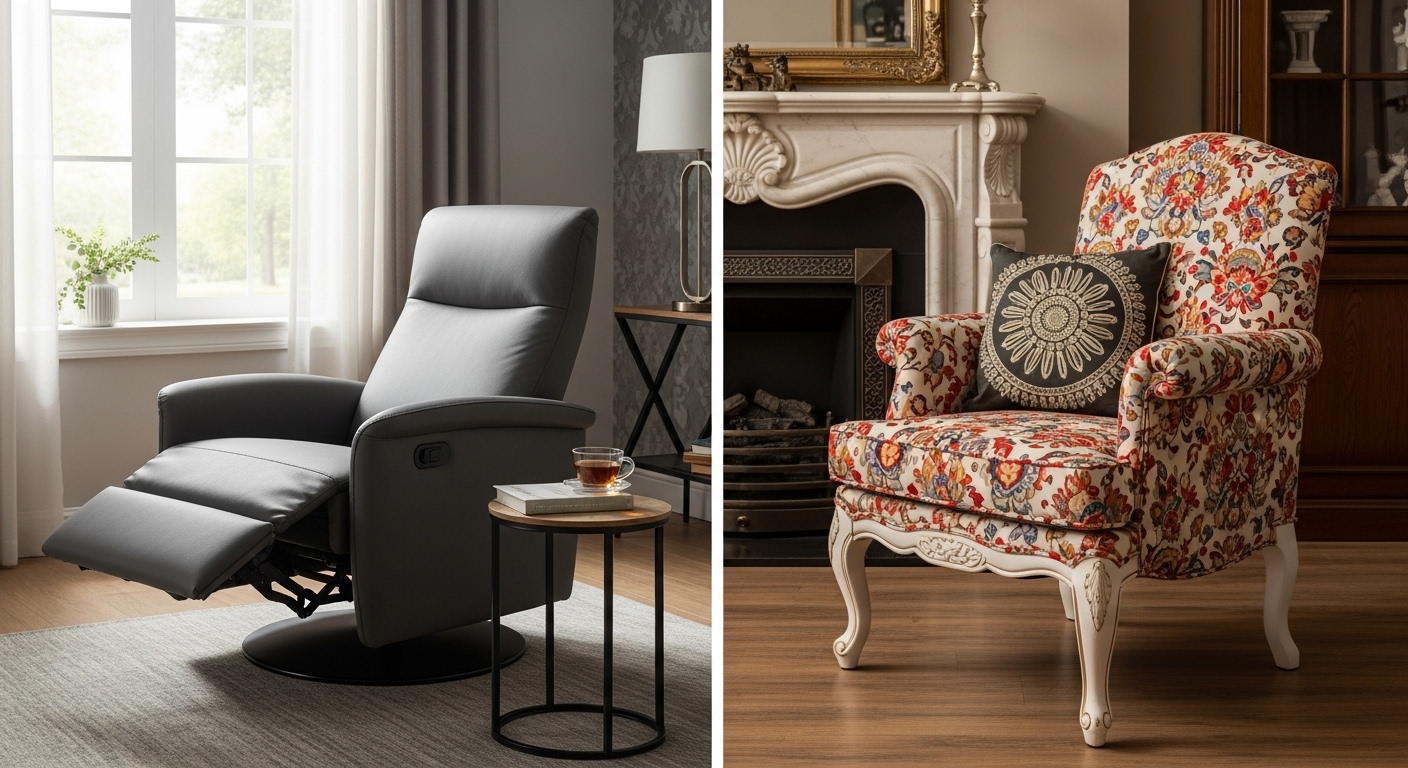
Small living rooms don’t forgive bulky furniture. One “wrong” chair can block walkways, make the room feel crowded, and turn your cozy corner into a daily obstacle course. I’ve tried both setups in tight spaces, and the best choice really depends on how you actually use your living room.
The real question isn’t “which is better?”
It’s: Do you want a chair for lounging (recliner) or a chair for balance + style (accent chair)?
In a small room, anything that tries to do everything can end up doing none of it well—unless it matches your routine.
What you gain (and lose) with a recliner in a small living room
Why recliners feel amazing
A recliner is the closest thing to a “home reset button.” If you:
- watch TV most nights
- nap on weekends
- deal with back/neck tension
- prefer feet-up comfort
…a recliner can legitimately improve your day-to-day comfort more than almost anything else.
The hidden costs in a tight space
Recliners don’t just take space—they take “action space.”
Even if the chair looks like it fits, you need extra clearance behind or in front depending on the style. In small rooms, that can mean:
- bumping into a coffee table
- blocking a walkway
- awkward angles that make the layout feel “off”
- constantly moving things to recline fully
Another reality: recliners visually dominate. Even neutral ones often read as “big furniture,” which can make a room feel smaller.
My honest take
In small rooms, recliners work best when:
- the living room is primarily for relaxing/TV
- you’re okay prioritizing comfort over a super airy look
- you can place it where it doesn’t interrupt traffic flow
If you’re the kind of person who actually uses the reclining feature daily, it can be worth the footprint. If you recline “sometimes,” it often becomes a space-hog you resent.
What you gain (and lose) with an accent chair in a small living room
Why accent chairs make small rooms easier
Accent chairs are basically the “layout-friendly” option:
- they’re lighter visually
- easier to reposition
- work in corners, near windows, or angled beside a sofa
- help define the room without taking over
If your living room needs to feel open, clean, and flexible, an accent chair usually wins.
The trade-off: comfort depends on the chair and how you sit
Accent chairs vary wildly. Some look great but feel like sitting in a waiting room after 20 minutes. Others are comfortable enough for long chats but not “feet up” cozy.
What I noticed:
Accent chairs encourage “upright living.” Great for:
- talking, reading, coffee, hosting
- short to medium lounging
Not great if you want a guaranteed “sink in and disappear” vibe.
My honest take
In small living rooms, accent chairs work best when:
- you host people or want extra seating that doesn’t crowd the room
- you value a clean, styled look
- you need flexibility (moving things around, multi-use space)
If you’re unsure, an accent chair is the safer default because it’s easier to live with in a tight layout.
The small-room decision guide (simple + practical)
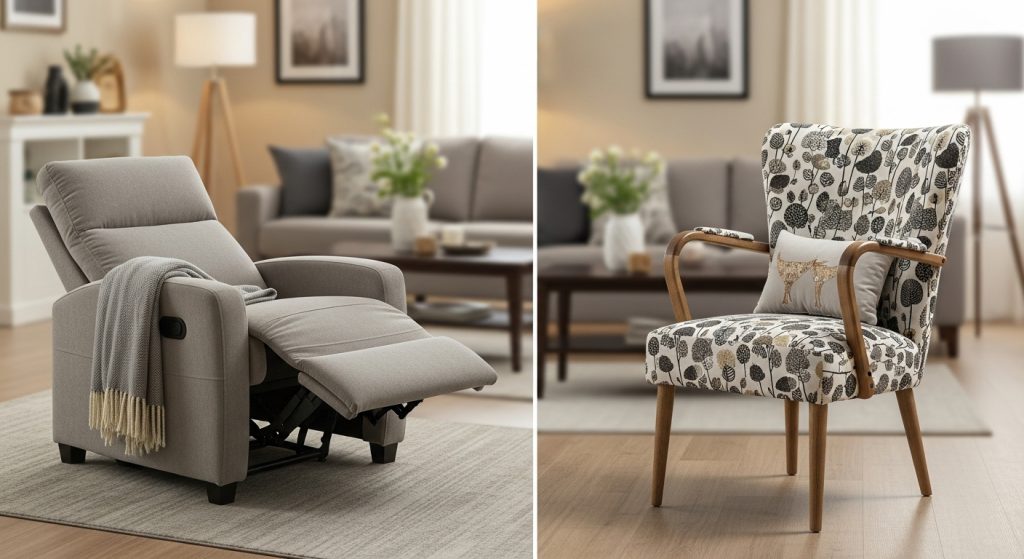
Choose a recliner if…
- You relax at home daily and want maximum comfort
- Your living room is your main “recovery zone”
- You don’t mind giving up some openness for comfort
- You can keep a clear path through the room even when it’s reclined (or partially reclined)
Choose an accent chair if…
- You want the room to feel bigger and lighter
- You need extra seating but hate bulky furniture
- You care about layout flexibility and traffic flow
- You don’t recline often and prefer a cleaner aesthetic
Real-life layout tips that matter more than people think
1) Protect your walking path
In a small room, you need a clear “lane.” If the chair interrupts your main route (door → sofa, sofa → kitchen), you’ll feel it every day.
2) Angle beats straight lines
An accent chair angled slightly can make the space feel intentional and open. Recliners usually want to face straight at the TV, which can force a rigid layout.
3) Think “visual weight”
A recliner can visually outweigh other pieces. If your sofa is already large, adding a recliner can make the room feel furniture-heavy fast. Accent chairs tend to balance better.
4) Don’t buy for the fantasy routine
This is the biggest one. Ask yourself:
- “Do I actually recline every day?”
- “Do I read in the living room, or do I scroll on my phone?”
- “Do I host friends often, or is it mostly just me?”
Small rooms punish “maybe.” You want furniture that matches what you do now.
The hybrid solution (what I’d do if you’re torn)
If you love comfort but fear the bulk, here’s the compromise mindset:
- prioritize a chair that’s comfortable upright
- keep the room flexible and airy
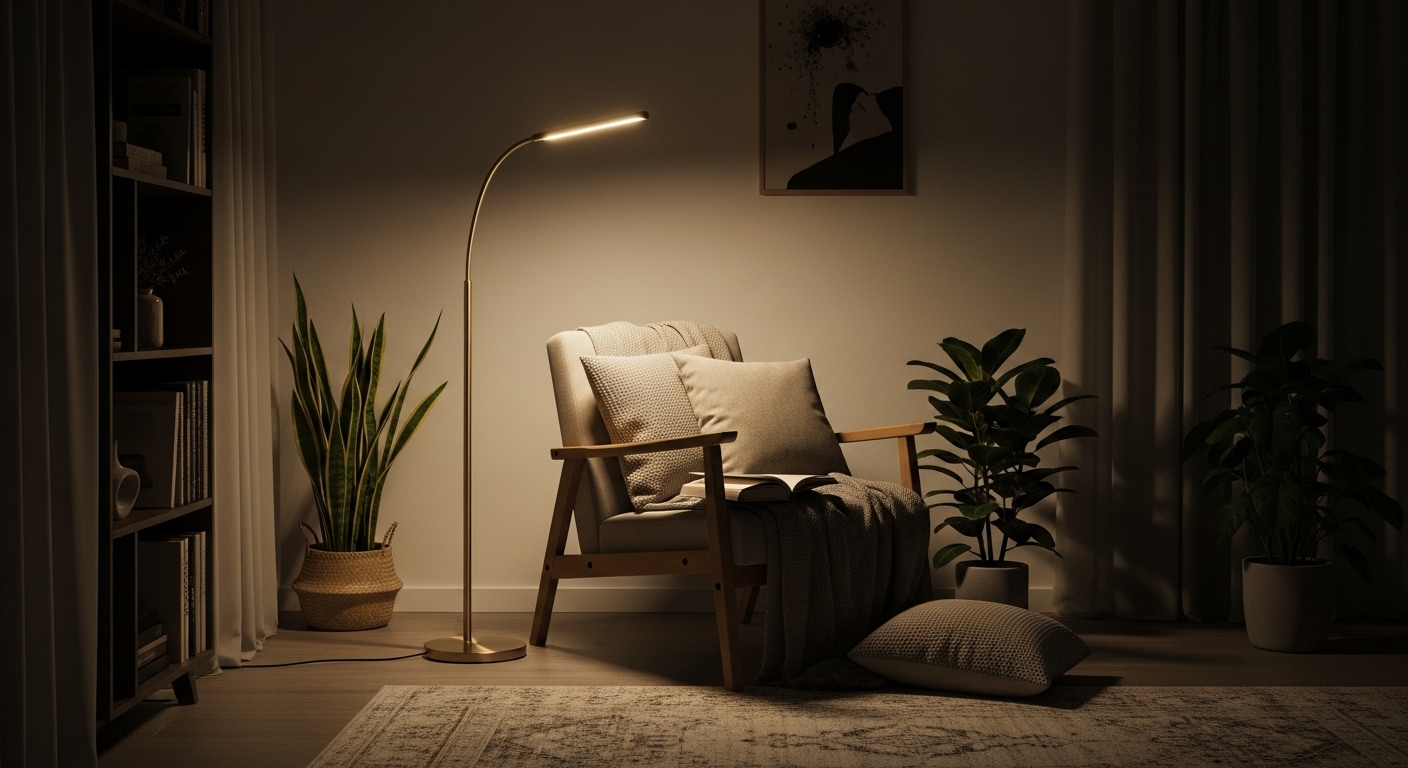
- add cozy upgrades (blanket, pillow, lighting) to make it lounge-worthy
Most people don’t need “maximum recline” every day—they need a space that feels good and functions smoothly.
Bottom line: what makes the most sense for small living rooms?
- If your living room is your main relaxation spot and you’ll use the feature constantly: recliner makes sense.
- If you want the room to feel bigger, cleaner, and easier to arrange: accent chair is usually the smarter choice.