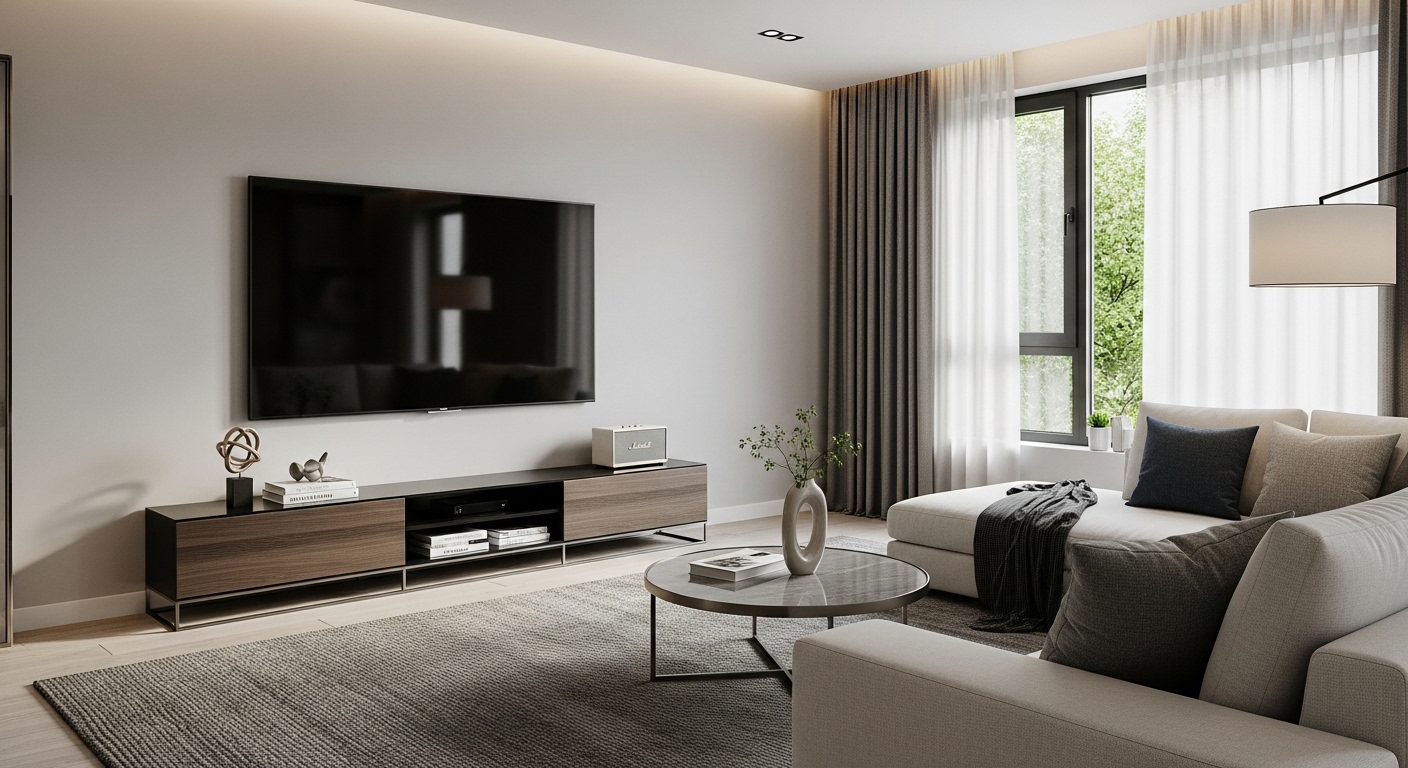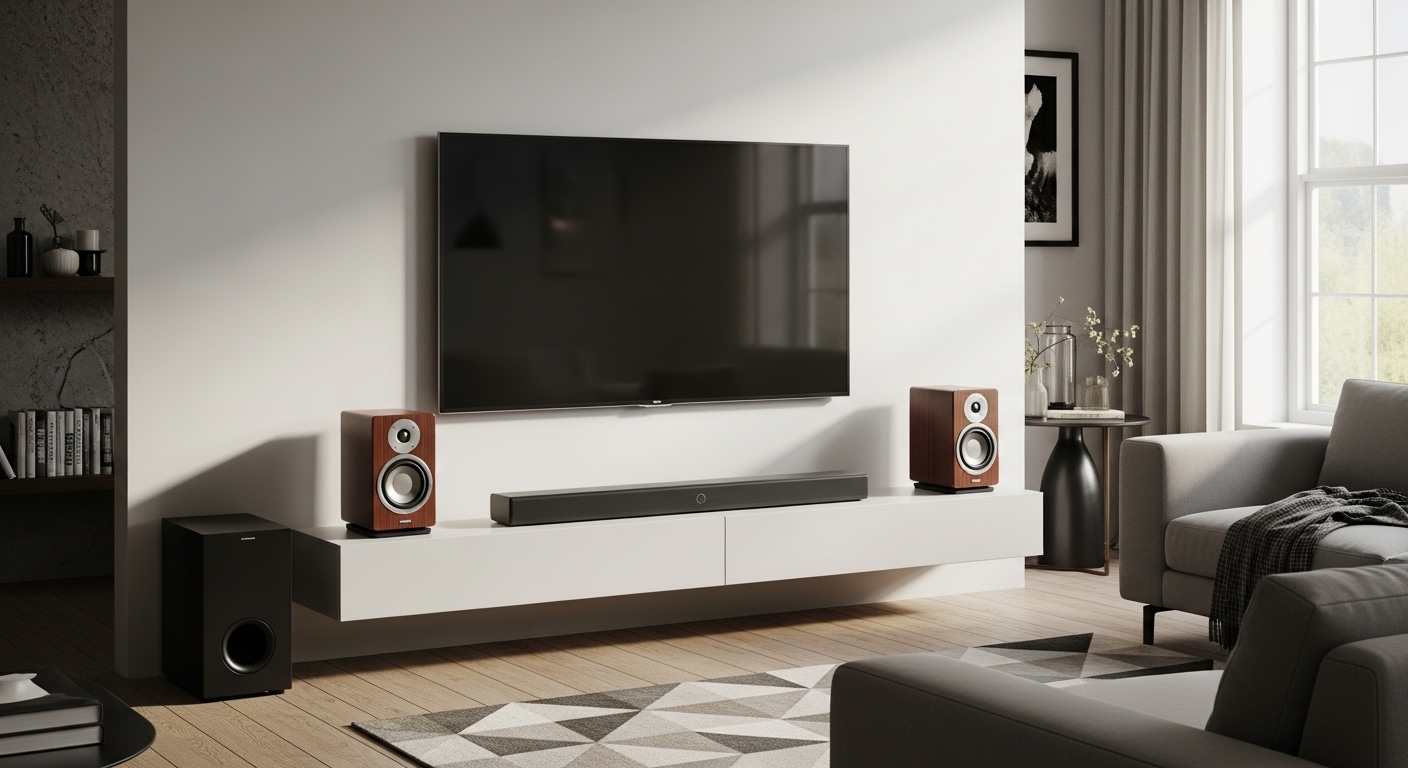
If your TV picture looks great but dialogue still sounds muffled, you’re not alone. Most living-room TVs have thin speakers pointed the wrong way. The real upgrade isn’t always a new TV—it’s better audio. The big choice usually comes down to soundbar vs bookshelf speakers.
Here’s the honest, living-room-first comparison for movie watching.
What matters most for movies (real-world priorities)
For most people, “better movie audio” means:
- Clear dialogue (voices front and center)
- Big, cinematic sound without cranking volume
- Easy setup that doesn’t take over the room
- Good performance at low volume (late-night watching)
Option 1: Soundbar (Pros & Cons)
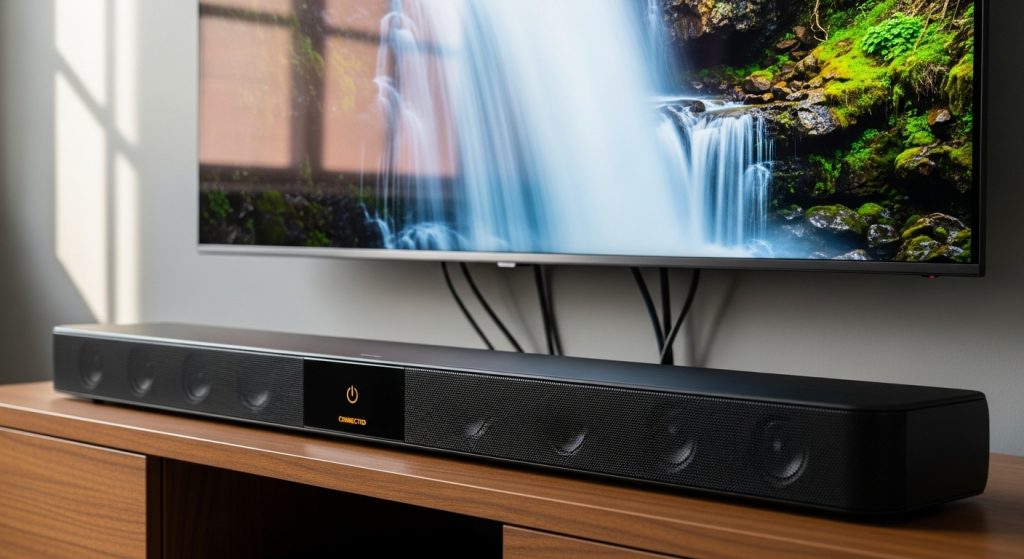
✅ Pros
1) Best “plug-and-play” upgrade
A soundbar is designed to be simple: one unit under the TV (sometimes with a subwoofer). It’s the fastest way to make movies sound fuller.
2) Dialogue usually improves immediately
Many soundbars have a dialogue/voice mode, which can help you hear speech without blasting explosions.
3) Great for small/medium living rooms
In tighter spaces, a soundbar is neat and doesn’t create the “where do I put speakers?” problem.
4) Clean look, fewer cables
For living rooms that need to stay minimal, soundbars win on aesthetics.
❌ Cons
1) Stereo separation is limited
Even good soundbars can’t fully replicate the left-right “wide stage” you get from real speakers spaced apart.
2) “Virtual surround” can be hit-or-miss
Some bars simulate surround well, others sound artificial depending on room shape and seating position.
3) Bass depends on the sub
Without a subwoofer, many soundbars sound thin for action movies. With a sub, you gain impact—but also add a box in the room.
Best for: people who want the biggest improvement with the least effort, smaller rooms, and anyone who values a clean setup.
Option 2: Bookshelf Speakers (Pros & Cons)
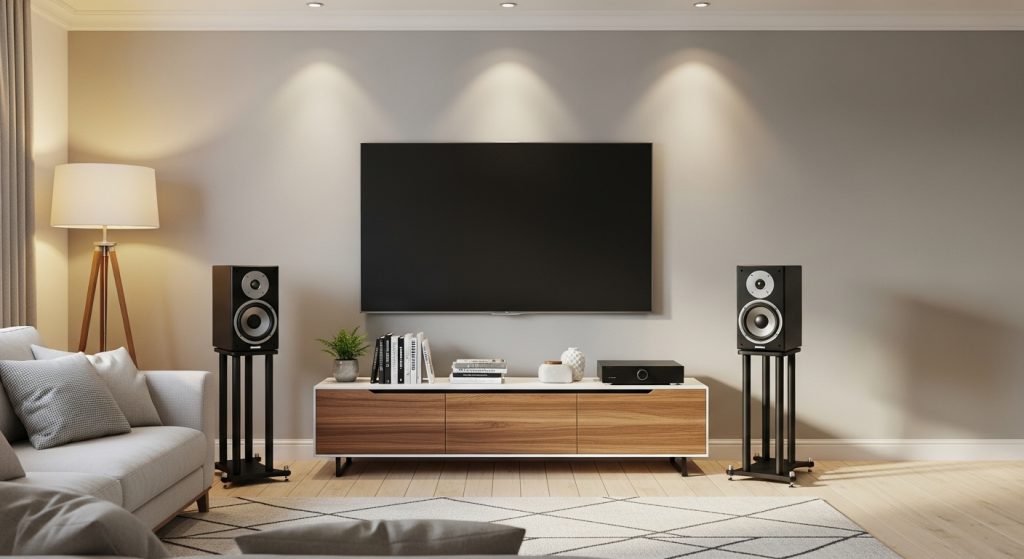
✅ Pros
1) Most natural, cinematic sound (when set up right)
A pair of bookshelf speakers creates real stereo separation. Movies feel more “wide,” music sounds better, and the room fills more naturally.
2) Stronger clarity and detail
Good speakers can make dialogue clearer without relying on processing modes. You hear texture—breathing, subtle background sounds, room reverb in scenes.
3) Better upgrade path
You can build over time:
- start with 2 speakers
- add a sub later
- expand to surround if you want
❌ Cons
1) More pieces, more setup
You’ll usually need:
- an amp/receiver (or powered speakers)
- speaker wire
- more placement effort
This is the part that turns “I’ll do it later” into “never got around to it.”
2) Placement matters a lot
If the speakers are shoved in a cabinet or too close together, you lose the main advantage.
3) Can be less living-room-friendly visually
Stands, wires, and positioning can conflict with décor, pets, kids, or a partner who hates “tech clutter.”
Best for: people who care about audio quality, have a little time for setup, and can place speakers properly.
Head-to-Head: Which is better for movie nights?
Dialogue clarity
- Soundbar: often wins instantly because voice modes are designed for TV dialogue.
- Bookshelf speakers: can be clearer and more natural, but only if set up well.
If you struggle with dialogue today: soundbar is the quicker fix.
Cinematic “wide” sound
- Bookshelf speakers win. Real separation creates a bigger soundstage.
Soundbars can’t fully replicate this unless you go higher-end and your room is ideal.
Bass and impact (action movies)
- Tie, depending on subwoofer.
- Soundbar + sub can hit hard easily.
- Bookshelf + sub can be even better, but costs/space go up.
Ease of setup and daily use
- Soundbar wins by a mile.
Especially if you want: simple remote control, fewer cables, minimal fuss.
Looks and space
- Soundbar usually wins for living rooms.
Bookshelf speakers need stands or shelves, plus cable management.
The “Optimal Choice” for most living rooms
✅ Best overall for most people: Soundbar
Because it gives the biggest real-world improvement with the least hassle:
- clearer dialogue
- fuller sound
- clean setup
For 90% of living rooms, that’s the sweet spot.
✅ When bookshelf speakers are the optimal choice
Choose bookshelf speakers if:
- you watch movies often and care about “theater-like” sound
- you can space speakers properly (not squeezed together)
- you don’t mind extra components/cables
- you want a system you can upgrade over time
If you’ll actually set them up right, bookshelf speakers deliver the more “cinematic” experience.
Quick decision guide (honest and practical)
Pick a soundbar if:
- you want better sound today, not a project
- you mainly want clearer dialogue
- you have limited space or hate wires
Pick bookshelf speakers if:
- you want the best movie soundstage and detail
- you’re willing to do placement and setup
- you might expand into a bigger system later
3 Setup tips that matter no matter what you choose
- Turn off TV “audio enhancement” modes if they make voices weird or hollow.
- Place the speaker/soundbar as close to ear height as possible (or angle it).
- Reduce echo: rugs/curtains help dialogue more than people expect.